










For years, outsourcing has been an essential part of modern drug development. Biopharma organizations rely on a global ecosystem of CROs, laboratories, manufacturers, and specialized scientific partners to accelerate research and bring therapies to patients faster.
As these external networks have grown, so has the complexity of managing them.
The recently enacted BIOSECURE Act represents another important milestone in that evolution. While much of the discussion has focused on which suppliers may be affected, the broader takeaway is clear: organizations need greater visibility into the third parties they work with and stronger governance over outsourced research operations.
The BIOSECURE Act isn't just a legal issue—it's an operational one. Here's what biopharma organizations need to know about supplier visibility and compliance governance.What does the BIOSECURE Act do?
The BIOSECURE Act, enacted as part of the FY2026 National Defense Authorization Act, places new restrictions on U.S. federal agencies and organizations receiving certain federal funding from procuring or using biotechnology equipment or services provided by designated Biotechnology Companies of Concern (BCCs). It also restricts federal agencies from contracting with organizations that rely on those companies in the performance of federal work.
The legislation is intended to strengthen supply chain security and reduce national security risks associated with sensitive biotechnology capabilities and biological data.
Importantly, the Act does not prohibit every company from doing business with these BCCs. Whether changes to supplier relationships are necessary depends on each company's specific circumstances, funding sources, contractual obligations, and legal interpretation. Those decisions ultimately require guidance from legal and compliance teams.
Compliance starts with visibility
For many organizations, the biggest challenge isn't understanding the law; it's understanding their supplier ecosystem.
Questions that once required extensive manual effort suddenly become business critical:
- Which suppliers are we currently using?
- Are any of those suppliers associated with entities identified under the Act?
- Which studies, purchase orders, or contracts involve those suppliers?
- How do we consistently enforce internal sourcing policies across research teams?
- How do we demonstrate appropriate diligence if asked?
These aren't simply legal questions. They're operational questions.
And they're becoming increasingly common as organizations navigate evolving regulatory requirements, geopolitical considerations, and enterprise risk management.
Beyond BIOSECURE
The BIOSECURE Act is one example of a broader trend.
Biopharma organizations are being asked to manage increasingly complex supplier networks while maintaining confidence in compliance, quality, data security, and procurement governance.
That requires more than spreadsheets and disconnected procurement processes.
It requires a centralized system that provides visibility into suppliers, standardizes procurement workflows, and gives organizations the ability to enforce internal policies consistently across global research teams.
Regulatory requirements are evolving—and biopharma organizations that build compliance into their R&D infrastructure today will be better positioned for whatever comes next.How Science Exchange helps
Science Exchange serves as the operational infrastructure connecting biopharma organizations with their external R&D ecosystem.
As part of our platform, we have monitored the BIOSECURE Act throughout its development and have implemented processes to help customers support their own compliance efforts.
Today, Science Exchange provides capabilities that can help organizations operationalize their internal compliance plans, including:
- Supplier diligence against the Department of Defense's Section 1260H list.
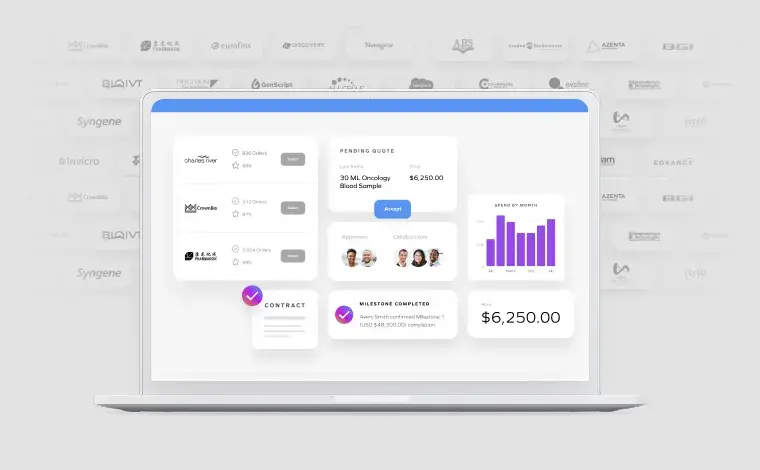
- Visibility into supplier relationships managed through the platform.
- Administrative controls that allow organizations, upon request, to block selected suppliers from receiving quote requests or new orders.
- Centralized procurement workflows that help standardize how external research is sourced and managed across teams.
- Right to terminate orders with any supplier without cause upon ten days notice or immediately with cause.
- Alternative supplier recommendations if an organization decides to end its engagements with any BCC.
These capabilities are designed to support customers as they implement their own compliance strategies, not replace the legal or policy decisions that remain the responsibility of each organization.
Compliance is becoming part of modern R&D infrastructure
Regulations will continue to evolve.
Whether the challenge is supply chain security, data governance, vendor risk, or future regulatory requirements, the organizations that are best prepared will be those with strong operational infrastructure already in place.
The BIOSECURE Act reinforces an important lesson: compliance becomes significantly more manageable when supplier information, procurement workflows, and governance controls are built into the platform that teams use every day.
At Science Exchange, we believe modern outsourced R&D requires more than access to suppliers. It requires the visibility, governance, and operational controls that allow organizations to innovate with confidence, even as the regulatory landscape continues to change.
If your organization is evaluating its approach to BIOSECURE compliance, our team can help you understand what governance capabilities are available within the Science Exchange platform and how they can support your internal compliance strategy. Contact us to learn more.