

FOR SCIENTIFIC SUPPLIERS
We're building the infrastructure that life sciences R&D has always needed.
Science Exchange was founded on a simple observation: the biggest bottleneck in life sciences R&D is not the science. It is everything around it.
Trusted by industry visionaries
What is the Science Exchange supplier network?
Every buyer relationship on the platform, under one agreement you sign once.
-
One network, every buyer
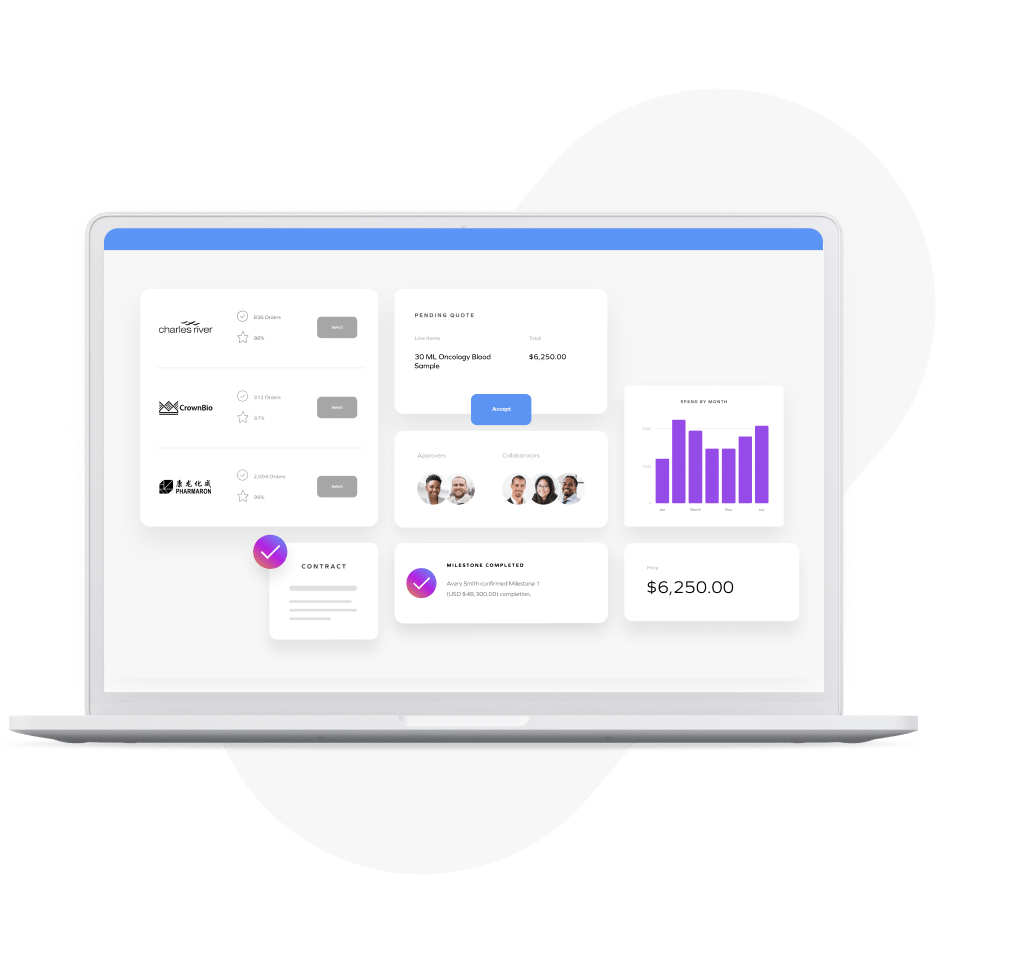
The Science Exchange supplier network puts CROs, scientific service providers, and lab consumables vendors in front of life sciences R&D organizations of every size, from emerging biotech through global pharma, actively sourcing external work. Every supplier relationship on the platform runs through a single standard agreement, so a supplier does not renegotiate terms or repeat qualification each time a different buyer sends a request.
-
Certified, audited, trusted
Existing agreements between a supplier and a requester can be uploaded to the platform and applied to work running through it. A single Master Services Agreement replaces the per-buyer contracting cycle most suppliers are running today. The platform is SOC 2 Type II-certified and ISO 9001-certified, with an audit trail of every interaction between supplier and requester. For suppliers already carrying quality certifications, that means the platform meets the same standards their own buyers hold them to.
-
Broad reach, one platform
Thousands of pre-qualified, pre-contracted supplier organizations are already on the platform. The network covers the full R&D continuum, from preclinical and clinical services through health economics and outcomes research (HEOR), so suppliers are not limited to a single category or buyer type.
What is the Science Exchange supplier network?
Every buyer relationship on the platform, under one agreement you sign once.
The Science Exchange supplier network puts CROs, scientific service providers, and lab consumables vendors in front of life sciences R&D organizations of every size, from emerging biotech through global pharma, actively sourcing external work. Every supplier relationship on the platform runs through a single standard agreement, so a supplier does not renegotiate terms or repeat qualification each time a different buyer sends a request.
Existing agreements between a supplier and a requester can be uploaded to the platform and applied to work running through it. A single Master Services Agreement replaces the per-buyer contracting cycle most suppliers are running today. The platform is SOC 2 Type II-certified and ISO 9001-certified, with an audit trail of every interaction between supplier and requester. For suppliers already carrying quality certifications, that means the platform meets the same standards their own buyers hold them to.
Thousands of pre-qualified, pre-contracted supplier organizations are already on the platform. The network covers the full R&D continuum, from preclinical and clinical services through health economics and outcomes research (HEOR), so suppliers are not limited to a single category or buyer type.
HOW DOES THE MASTER SERVICES AGREEMENT WORK?
Sign once. Work with every buyer on the platform.
Most CROs and contract labs know this math: a new customer means four to twelve weeks of legal review, redlines, and back-and-forth before any billable work starts. Multiply that by every buyer in your pipeline and the cost shows up everywhere: legal fees, BD time burned on paperwork instead of selling, and deals that die waiting for signatures.
The Science Exchange MSA eliminates that cycle entirely. Suppliers execute one standard agreement with Science Exchange, and that agreement authorizes work with every requester account on the platform. The fifth buyer, the fiftieth, the five-hundredth, all covered. No separate NDAs, MTAs, or SOWs. The Science Exchange MSA eliminates that cycle entirely. Suppliers execute one standard agreement with Science Exchange, and that agreement authorizes work with every requester account on the platform. The tenth buyer, the fiftieth, the hundredth, all covered under the same paper. Suppliers who already hold contracts with a requester can upload those agreements and use them on the platform. The platform overview covers how this works from the buyer side.

OUR COMMITMENTS
What are the benefits for Science Exchange suppliers?
Stop building pipeline. Start receiving it.
Joining Science Exchange changes the commercial model for a supplier. Instead of building outbound sales infrastructure to reach each new buyer individually, suppliers become visible to every requester account on the platform the day they qualify. Four things shift:
Reach without headcount
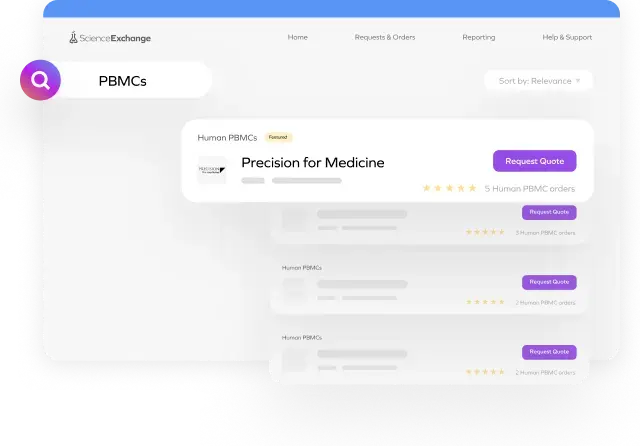
R&D orgs across the globe are sourcing on Science Exchange every day. A qualified supplier shows up in their search results without a single cold call, trade show booth, or BD hire.
Faster cycles
The legal groundwork is done before any buyer sends a request. Opportunity-to-PO cycle time runs roughly 50% faster than industry standard for suppliers using the platform's fixed-price and workflow tools. That is weeks back on every deal.
Flexibility in how you sell
Suppliers can list fixed-price catalog items for standardized assays and reagents alongside custom-quote services for bespoke project work. The platform handles both without forcing you into a single model.
Visibility into demand
Suppliers see category rankings, competitive quote counts, and trending products across the network, so quoting strategy is informed by what the network is buying rather than guesswork.
The storefront has already generated results and we are excited about the momentum it will create through the end of the year. I feel like we were missing out on a lot of potential opportunities because we didn't know about them because we weren't on the platform.
Head of Commercial Multi-Omics
Precision medicine company
What data do suppliers get from Science Exchange?
Analytics that show you where you're ahead, and where you are not competing.
Most suppliers quote blind. You send a proposal, you win or you lose, and you find out nothing about why. Science Exchange gives qualified suppliers an analytics view into demand across the platform that no individual buyer relationship can provide.
Supplier analytics show how many competitors quoted on the same request, where the organization ranks within a service category, and which products and services are trending across the network. Standard reporting covers request volume, quote conversion rates, earnings, and turnaround times. Together that shows a supplier where to concentrate quoting effort and where a catalog gap is costing them inbound requests. The platform overview covers the buyer-side view of the same system.

How do suppliers get paid on Science Exchange?
One payment system. Not twelve AP departments.
Ask any supplier what kills margin faster than pricing pressure, and the answer is usually collections. Chasing invoices across a dozen buyers, each with a different AP process, different payment terms, and a different portal to log into.
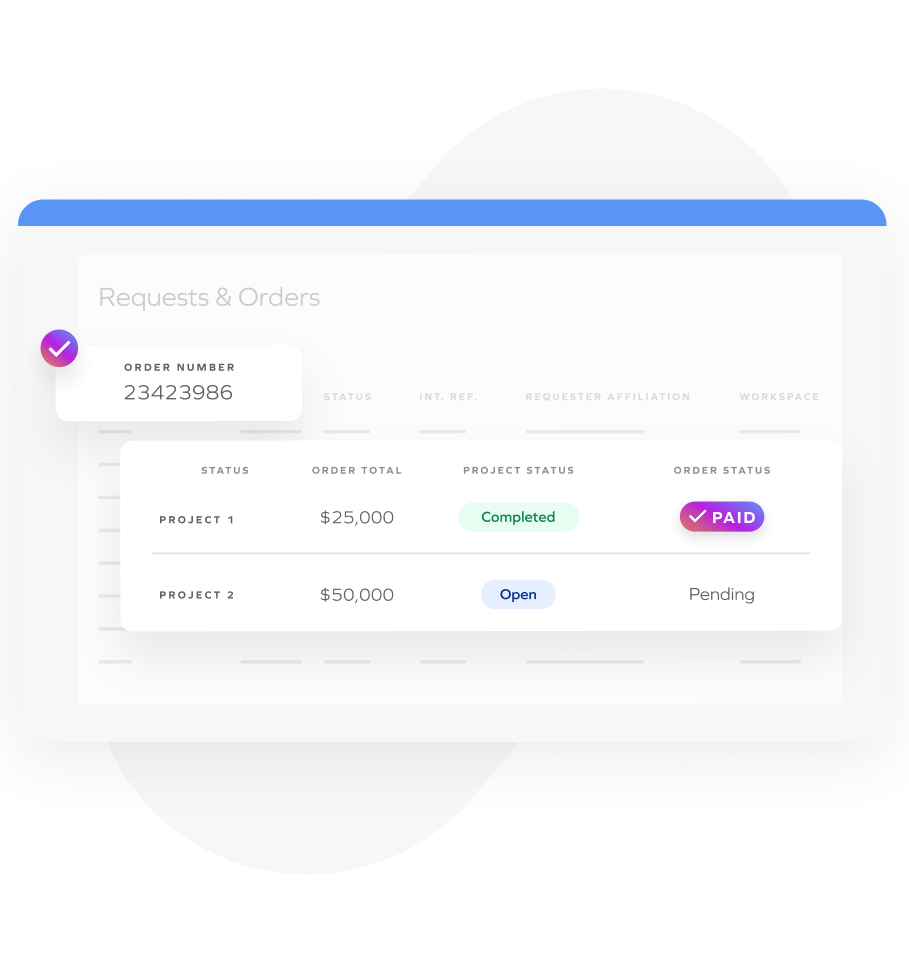
Science Exchange's centralized payment processing matches invoices to purchase orders and completed milestones automatically. Suppliers get paid through one system regardless of which buyer placed the order. No separate invoicing setup per customer. No reconciliation across multiple portals. The payments capability page covers the full mechanics.

What does supplier qualification check?
The vetting your buyers would do anyway, done once instead of fifty times.
Every buyer on the platform needs to trust that a supplier meets their compliance and risk standards. Without Science Exchange, that means every buyer runs their own qualification process, and every supplier repeats the same documentation exercise for each one.
Science Exchange qualification runs once and covers three layers: financial robustness, regulatory and legal sanction screening, and address and website verification at the application stage, then deeper assessments (information security, anti-bribery and anti-corruption, animal welfare where applicable) plus signing the Supplier Signature Form agreement and completing payment verification at the qualification stage. Buyers can view verified accreditations directly on the supplier's storefront before sending a request. That storefront becomes the supplier's credential set across the entire network.
Regulatory scrutiny on external R&D suppliers is increasing, not decreasing. The FDA's continued push on alternatives to animal testing is one current example of why buyers need supplier-side documentation they can trust before a study starts. Full detail on the qualification process is on the Become a Supplier page.

ADDRESSING THE REAL CONCERNS
Questions We Hear Frequently
Is there a cost to join the Science Exchange supplier network?
No. Science Exchange generates revenue from the buyer side of the platform. There is no cost to apply, qualify, or list your services. Suppliers are not charged a subscription or listing fee to appear in buyer search results. You apply, qualify, and appear in buyer search results at no cost.
How is Science Exchange different from a supplier directory?
A directory lists your name. Science Exchange qualifies you once against a documented compliance and financial standard, puts you under one legal agreement with every buyer on the platform, and gives buyers verified performance data and certifications on your profile. The contract structure is what separates the two.
What service categories does Science Exchange cover?
The platform covers services and consumables across the R&D continuum: preclinical, clinical, and health economics and outcomes research (HEOR). See the industries page for the current category list.
Do I need a separate contract for each buyer?
No. One Master Services Agreement with Science Exchange covers work with every requester account on the platform. Existing agreements between a supplier and a requester can also be uploaded to the platform and applied.
How long does supplier qualification take?
Timeline depends on the services offered and the documentation submitted. The process runs in three stages: application checks (financial robustness, regulatory screening, address verification), qualification assessments (information security, ABAC, animal welfare where applicable, plus the Supplier Signature Form and payment verification), and onboarding setup. More detail on each stage is on the application page.