


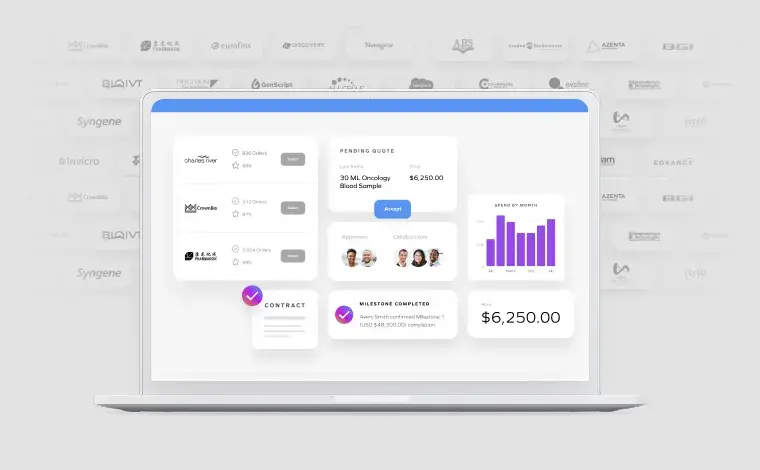












Trusted by industry visionaries







BUILT FOR THIS WORK. SPECIFICALLY.
Five things make Science Exchange structurally different.
-
A provider network no single organization could build alone.
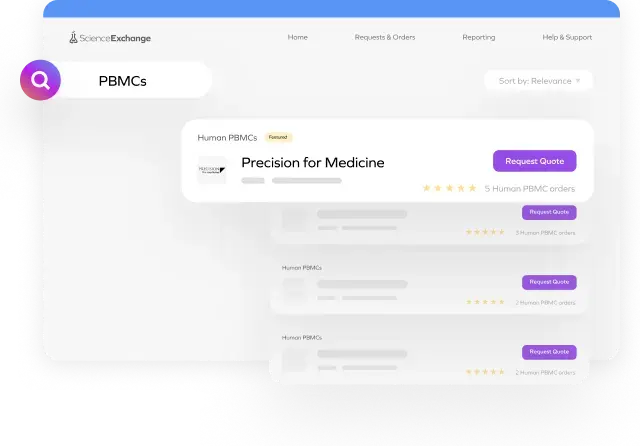
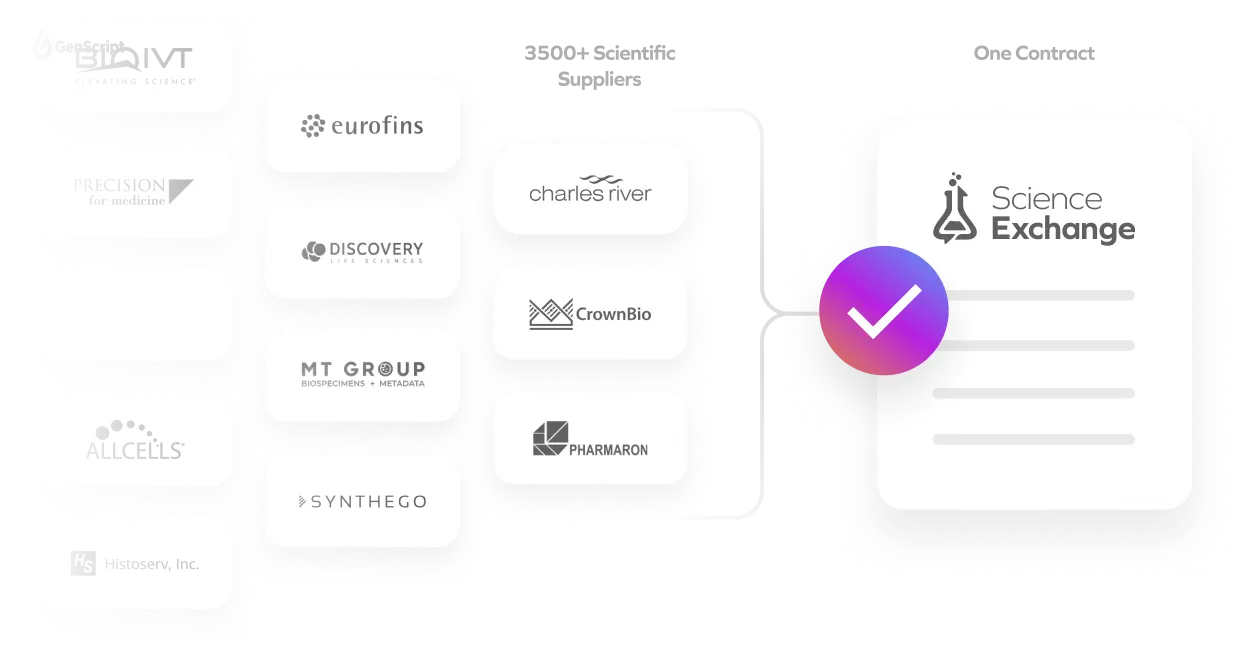
Thousands of pre-vetted research providers across 7,000+ scientific service categories, available on day one. The empty-marketplace problem is the hardest challenge in B2B platforms, and it's already been solved. New customers come online into a live network, not a blank system.
-
A single master agreement covering the entire network.
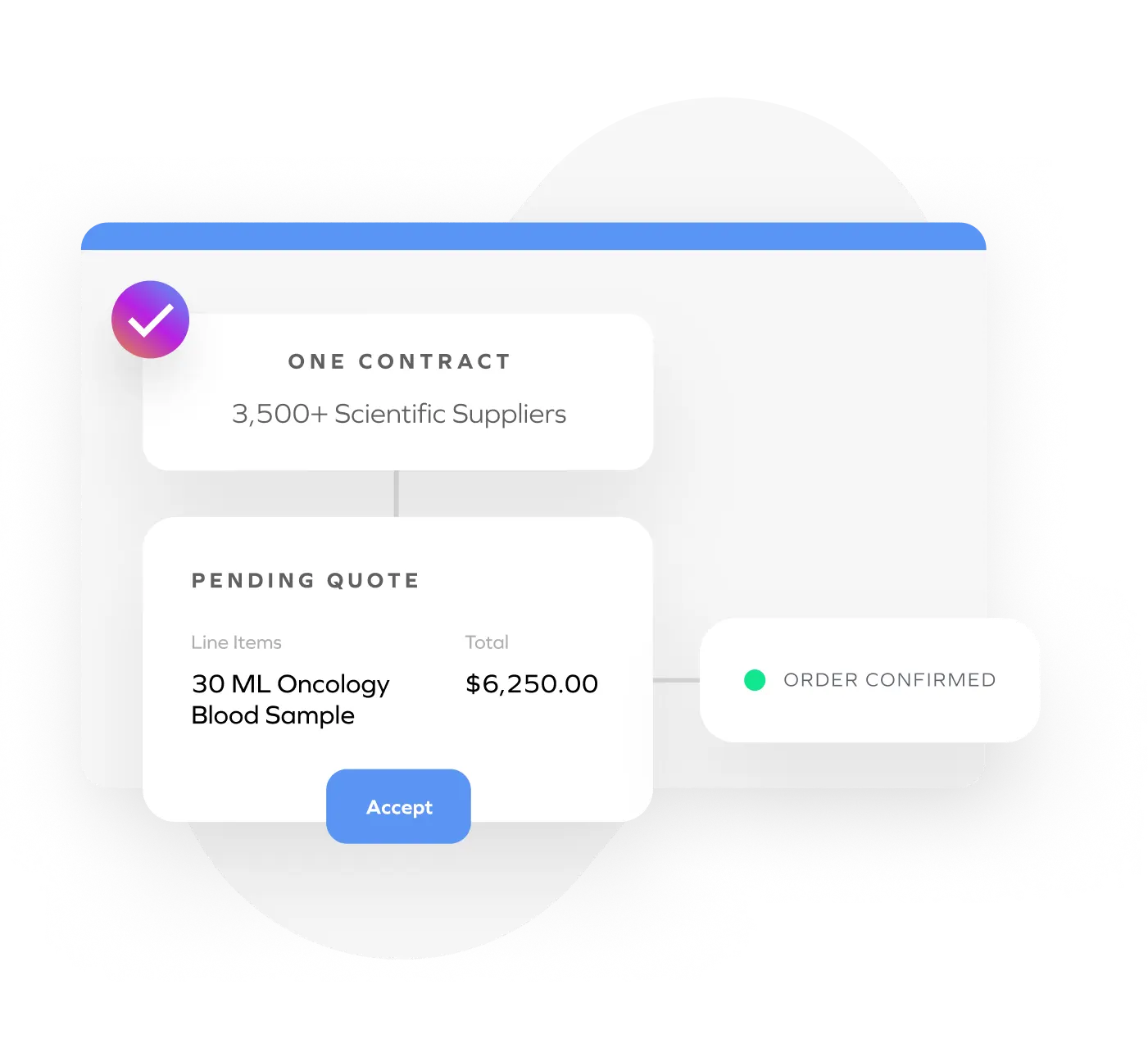
Most organizations negotiate a new contract with every new provider. Science Exchange replaces that with one framework MSA covering thousands of pre-vetted providers. Legal review happens at the framework level, not per engagement. The result: projects move from selection to signed agreement in days, not months.
BUILT FOR THIS WORK. SPECIFICALLY.
Five things make Science Exchange structurally different.
Thousands of pre-vetted research providers across 7,000+ scientific service categories, available on day one. The empty-marketplace problem is the hardest challenge in B2B platforms, and it's already been solved. New customers come online into a live network, not a blank system.
Most organizations negotiate a new contract with every new provider. Science Exchange replaces that with one framework MSA covering thousands of pre-vetted providers. Legal review happens at the framework level, not per engagement. The result: projects move from selection to signed agreement in days, not months.



-
Data that compounds into intelligence.
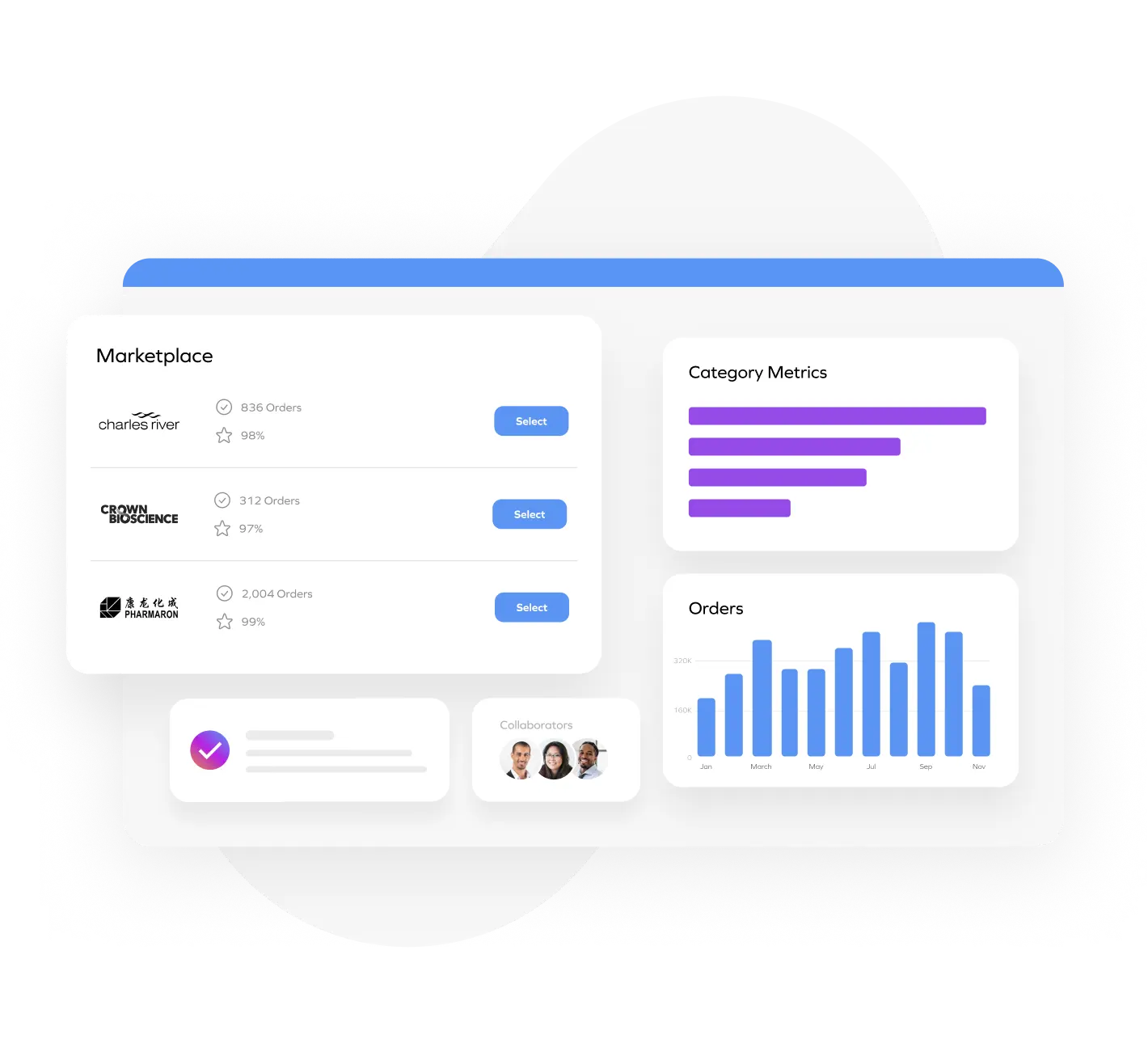
In most organizations, data from outsourced research is fragmented across systems, teams, and suppliers. Science Exchange captures structured data across every interaction: supplier performance, pricing and timelines, project outcomes, and operational metrics.
Over time, this creates a compounding data advantage: better decisions, faster partner selection, and more predictable outcomes. This is where the platform evolves from infrastructure to intelligence.
-
Compliance and audit built into the transaction layer.
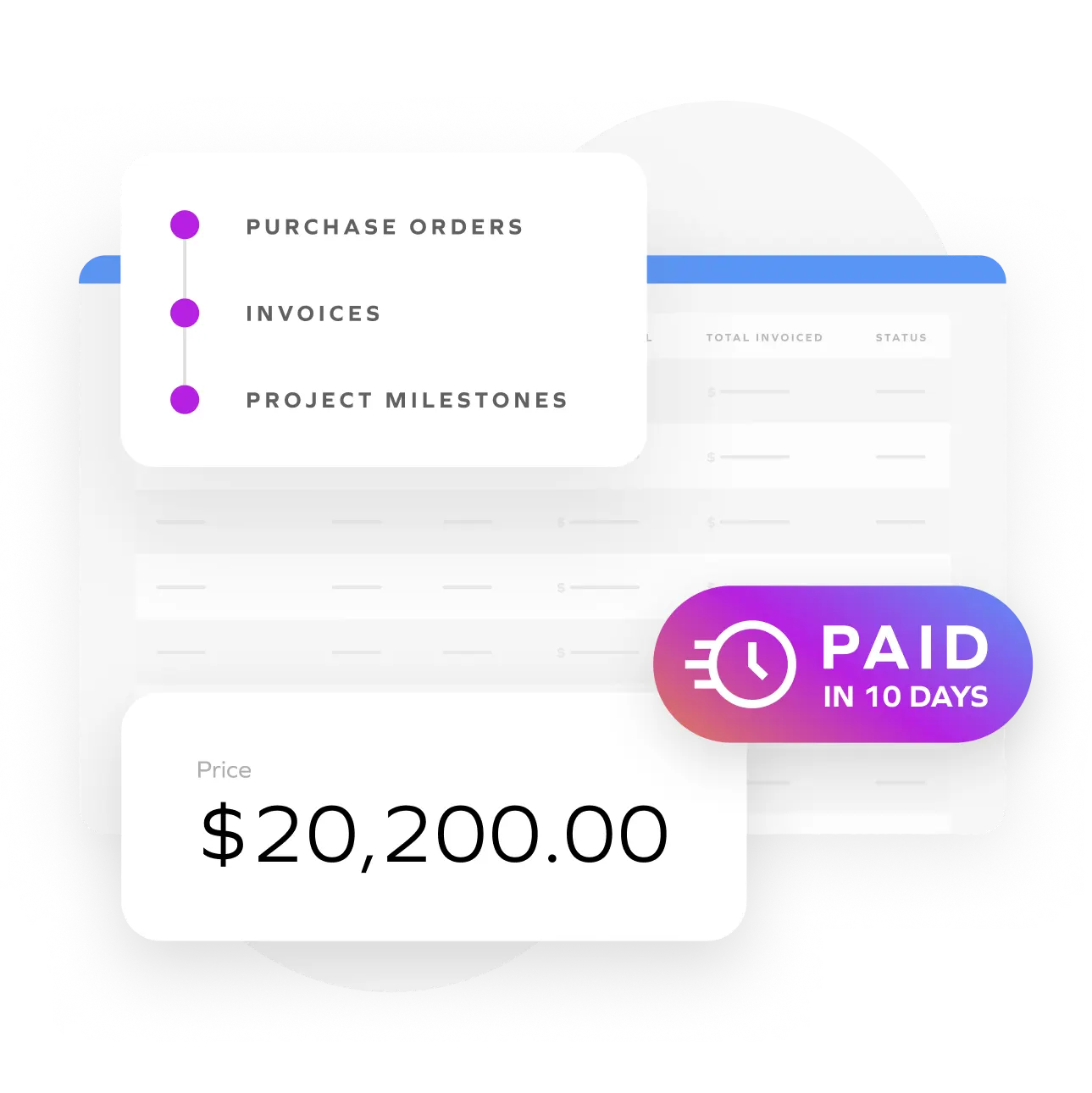
In general procurement platforms, compliance is something you configure and maintain on top of the tool. In Science Exchange, it's part of the transaction itself. Every engagement generates an audit trail automatically. Every provider carries pre-verified compliance status. Every transaction is ready for audit the moment it closes.
-
Purpose-built for life sciences research.
Horizontal procurement platforms were built for indirect spend: office supplies, IT services, facilities. They can be adapted for research, but adaptation has limits. Science Exchange was built from the ground up for the speed, compliance, and scientific specificity of life sciences R&D. The workflows, the data model, and the provider network were all designed for this work.
In most organizations, data from outsourced research is fragmented across systems, teams, and suppliers. Science Exchange captures structured data across every interaction: supplier performance, pricing and timelines, project outcomes, and operational metrics.
Over time, this creates a compounding data advantage: better decisions, faster partner selection, and more predictable outcomes. This is where the platform evolves from infrastructure to intelligence.
In general procurement platforms, compliance is something you configure and maintain on top of the tool. In Science Exchange, it's part of the transaction itself. Every engagement generates an audit trail automatically. Every provider carries pre-verified compliance status. Every transaction is ready for audit the moment it closes.
Horizontal procurement platforms were built for indirect spend: office supplies, IT services, facilities. They can be adapted for research, but adaptation has limits. Science Exchange was built from the ground up for the speed, compliance, and scientific specificity of life sciences R&D. The workflows, the data model, and the provider network were all designed for this work.

What it is

Purpose-built infrastructure for life sciences research. One platform, one MSA, one workflow for every function: sourcing through payment.
A workflow layer over supplier discovery and bidding. Helps scientists find and request providers, but contracting, compliance, and payment still live in your existing systems.
Horizontal tools adapted for life sciences. Built for indirect spend, not for the compliance and scientific specificity of R&D.
Each engagement is sourced, contracted, and paid for from scratch. Every team carries the overhead individually.
Operational impact
Thousands of pre-vetted providers. Compliance, contracting, and payment built into the transaction layer itself. 6.5x faster project initiation.
Vetted supplier network and AI-assisted bidding. But contracts route to your legal team. Payments flow through your ERP. The connective tissue across functions still has to be built and maintained.
Limited provider network. Compliance bolted on, not built in. Minimal support for scientific services.
50+ hours per onboarding. Legal reviews every contract individually. Finance reconciles manually.
Cross-functional fit
Scientists, procurement, legal, and finance all operate from one shared workflow. 5 weeks returned per scientist, per year.
Scientists get a better front-end experience. Procurement gets sourcing data. Legal and finance still operate from their own systems: the friction moves rather than disappears.
Works for office supplies and IT services. Less relevant for complex scientific engagements with IP and compliance risk.
No shared source of truth. Each function sees a different slice of the same problem.
Total cost & ceiling
Designed for this work specifically. Outcomes measured across the entire R&D operations lifecycle, not just the sourcing front end.
Faster sourcing. But the deeper bottlenecks (contract cycle times, compliance verification, payment reconciliation) sit outside the platform's control.
Deployable, but requires heavy customization. Value capped by what a horizontal tool can support.
Lowest upfront cost. Highest total cost, paid in program delays and unmeasured scientist time.


