











As clinical trials grow increasingly complex, the traditional outsourcing models are being replaced by more specialized approaches. For decades, full-service outsourcing (FSO) models dominated the clinical development space, with sponsors delegating the entirety of trial responsibilities to a single contract research organization (CRO). However, as trials have become more complex and therapeutic areas demand specialized expertise, the functional service provider (FSP) model has emerged as a preferred approach for many pharmaceutical sponsors.
A recent post by Fierce Biotech made the point that the transition from FSO to FSP models is accelerating across clinical development. A 2023 survey reported that 41% of biopharma and biotech leaders increased their reliance on FSP outsourcing, compared to 27% who maintained FSO models (Fierce Biotech). Three factors largely drive this shift:
- Flexibility and Customization: The FSP model allows sponsors to engage suppliers with specialized expertise for distinct trial components rather than relying on a single CRO for all activities.
- Cost Efficiency: Sponsors can optimize resources by selecting the most qualified vendors for specific tasks, reducing overhead costs.
- Operational Agility: FSPs offer greater scalability and faster response times, crucial for large, multi-site trials.
While the benefits are attractive, this approach significantly increases coordination and administrative burden on clinical operations teams, requiring them to manage multiple vendors directly and ensure alignment across all trial components.
Clinical trials involve increasingly complex outsourcing arrangements, requiring sponsors to directly manage a broad set of specialized suppliers responsible for various trial components.
Sponsors working within an FSP model must ensure that multiple suppliers, often with highly specialized capabilities, work together to deliver on trial milestones. This requires clinical operations teams to oversee various workflows, budget changes, synchronize timelines, and manage handoffs across suppliers—tasks traditionally handled manually through spreadsheets, emails, and fragmented documentation. The lack of a centralized system to facilitate integration and coordination increases the risk of delays, errors, and misalignment between sponsors and suppliers. It can also divert valuable resources away from strategic trial oversight, as teams are forced to focus on administrative tasks to keep the study moving forward. While FSP offers flexibility and access to specialized expertise, it places far greater administrative responsibility on sponsors to integrate and coordinate outsourced functions.
Without the right technology to streamline these business processes, sponsors face additional challenges in achieving visibility across all clinical trial components. Financial controls such as budget tracking, change order approvals, and rate card compliance become increasingly difficult when managed across a growing supplier base. This complexity compounds with the scale of clinical trials, particularly in multi-site or multi-phase studies, where inefficiencies in coordination can significantly impact study timelines and costs.
The Challenges of Managing a Larger Clinical Supplier Base
For a sponsor managing a Phase 3 oncology study—often involving dozens of sites, Central Labs, imaging providers, and niche ancillary CROs—the operational complexity can delay study initiation and execution. Key process challenges include:
- Study Intake and RFI/RFP Management: Coordinating RFIs and RFPs for specialized services becomes a time-intensive task, often managed by email and spreadsheets.
- Budget Life Cycle and Rate Card Validation: Ensuring supplier budgets align with pre-negotiated rate cards in MSAs requires meticulous review and introduces risks of errors.
- Collaboration Between Stakeholders: Communication across sponsors and multiple vendors often lacks a central hub and is done via email, leading to potential communication silos and downstream budget errors.
- Tracking Change Orders: Managing budget amendments and ensuring proper documentation is a manual, fragmented process that relies on complex Excel models.
- Spend & Payment Processing Transparency: Consolidating data from diverse suppliers for reporting and analysis is a significant challenge, particularly around invoices and attribution of invoices to specific budget lines.
These challenges are common across the full life cycle of clinical trials and highlight the critical need for a digital supplier orchestration platform built for clinical development operations.
Introducing the Industry’s First Clinical Development Supplier Orchestration Solution
The Science Exchange Clinical Development Supplier Orchestration Solution addresses these pain points head-on, offering sponsors a centralized platform to manage the complexities of FSP and FSO models. Key features include:
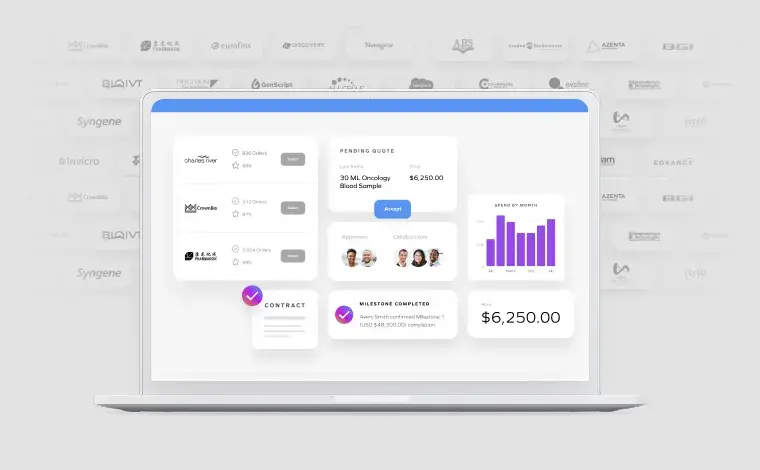
- Digital Workspaces: Streamline all supplier engagements, budgets, and contracts on a single platform, providing visibility and control across the trial lifecycle.
- On-Cloud Budget Grids: Digital budget grids enable strong budget compliance and reduce version control errors.
- Rate Card Compliance Automation: Automatically validate budget lines against supplier-specific rate cards in MSAs, flagging discrepancies to ensure compliance at the line level.
- Real-Time Collaboration: Foster seamless communication between sponsors and vendors, eliminating the silos that often delay trials.
- Change Order Log Management: Digitize the process of tracking and approving budget modifications, ensuring an audit trail for compliance.
- Spend Data Mining: Centralize and validate supplier spend data at the budget line level to generate actionable insights and ensure alignment with trial budgets, whether at the study or program levels.
- Automated Invoice Matching to Budget Lines: Automate invoice matching to specific lines from the study budget, driving more effective accruals and financial controls.
The Case for Supplier Orchestration Technology in FSP Operating Models
For sponsors transitioning to an FSP model, Science Exchange’s new orchestration platform provides the operational backbone needed to manage an expanded supplier ecosystem effectively. By digitizing intake, contracting, and budget validation processes, sponsors can minimize administrative burdens, reduce costs, and focus on strategic trial oversight.
The platform also supports FSO models by enabling clinical operations teams to digitize the full-service CRO budget management process, ensuring streamlined collaboration and accountability. For example, in Central Labs—a critical area for early adoption—the platform automates study-specific budget validation and integrates seamlessly with existing systems, significantly reducing study startup times.
A Vision for the Future
As the industry continues to embrace FSP models, the need for robust orchestration technology will only grow. Sponsors face increasing pressure to deliver trials faster, with greater efficiency and precision. Science Exchange’s solution not only addresses today’s challenges but also lays the foundation for a future where supplier management processes are entirely digitized and optimized.
To learn more about how Science Exchange transforms clinical development outsourcing, don’t miss our webinar: Supplier Orchestration in Action: Modernizing Clinical Operations through Technology. Register now.
Sources / References
- Fierce Biotech: https://www.fiercebiotech.com/sponsored/market-insights-whats-driving-shift-toward-fsp-models-clinical-development
- Clinical Leader: https://www.clinicalleader.com/doc/the-role-of-the-cro-is-changing-why-0001
- PPD Trends Report 2023: https://www.ppd.com/wp-content/uploads/2022/02/PPD-FSP-Trends-report-021022.pdf
- Applied Clinical Trials Online: https://www.appliedclinicaltrialsonline.com/view/anticipating-near-term-structural-change-in-the-outsourcing-landscape
- Danforth Advisors: https://www.danforthadvisors.com/resources/fsp-vs-fso-whats-missing-in-the-conversation