











A New Lens on R&D Spend
Biopharma companies face a persistent challenge: gaining visibility into R&D spend, especially in complex services categories. While catalog goods lend themselves to neat SKUs and price tracking, preclinical and clinical outsourcing is different. It’s bespoke, variable, and resistant to standardization, and that has kept much of this spend in the dark.
Science Exchange’s Supplier Orchestration Platform offers a new path forward, transforming complex study budgets into structured, actionable data. For R&D and Clinical Ops, Procurement, Finance, and Alliance teams, this shift delivers not just visibility but a true competitive advantage.
The Current State: Data silos and limited visibility
In many organizations, R&D and Clinical services spend is coded in broad, high-level buckets within P2P and ERP systems. Purchase orders often capture only single-line header data, leaving procurement and operations teams unable to drill into the true cost drivers.
Why? Because supplier budgets for complex studies arrive as PDFs or excel spreadsheets with hundreds of line items - tasks, milestones, deliverables - that rarely make it into structured systems. The result is static attachments instead of usable spend and cost data, leaving procurement and ops teams blind to one of its most strategic categories.
The lack of granular data remains a primary barrier to cost efficiency and strategic sourcing in pharma R&D (1).
The Ripple Effects of Poor Spend Data
When granular visibility is missing, the consequences cascade across the organization:
- Spend Leakage and Overpayments: Without a technology system to automatically validate budget grids and rate card compliance at scale, sponsors risk overpaying for studies due to manual errors and oversight. This can lead to budget overages and missed savings opportunities in the millions.
- Inability to Benchmark Effectively: Without structured spend data based on tasks & deliverables, organizations cannot benchmark costs across studies, therapeutic areas, or suppliers. This lack of benchmarking data hampers the ability to identify cost-saving opportunities or assess supplier performance.
- Missed Opportunities for Should-Cost Modeling: Should-cost models require detailed data inputs for tasks, resources, activities, and deliverables to forecast fair pricing for specific services. Header-level data provides no granularity, rendering such models ineffective for R&D services.
- Ineffective Supplier Negotiations: Without historical line-level spend data, procurement teams enter supplier negotiations at a disadvantage. They are unable to leverage past pricing trends, scope details, or volume-based cost patterns to drive favorable terms.
- Fragmented Reporting and Compliance Risk: Aggregated, high-level spend data limits organizations’ ability to meet reporting requirements or ensure compliance with internal or external financial controls. This lack of visibility also heightens the risk of overpaying for services due to undetected errors or inconsistencies in supplier budgets.
- Delayed Payment Processing: The absence of detailed, structured PO/Invoice data often slows down invoice approvals as stakeholders scramble to reconcile high-level POs with the actual work performed
- Missed Strategic Insights: Beyond cost savings, granular data enables organizations to analyze spending patterns, assess supplier innovation, and refine sourcing strategies to align with long-term R&D objectives. Without structured data, these insights remain out of reach.
In a recent report by Gartner, research showed that organizations failing to digitize procurement workflows risk a lasting competitive disadvantage - especially in pharma, where innovation speed is critical (2).
The Cost of Inaction
Together, these downstream effects translate into:
- Higher costs & spend leakage: Without granular spend visibility, organizations miss out on cost-saving opportunities in supplier negotiations and category management.
- Increased risk: Manual processes for handling complex study purchasing data increase the likelihood of errors, compliance failures, downstream change orders, and financial discrepancies
- Lost strategic value: The inability to analyze spend data down to the task and resource undermines procurement’s role as a strategic partner in driving innovation and supporting R&D priorities
- Strained relationships with critical suppliers. Delayed payment could impact suppliers’ willingness to prioritize future projects or agree to more favorable terms
- Reduced Competitiveness: Companies that fail to modernize their R&D procurement and accruals processes risk falling behind peers who leverage advanced analytics tools to optimize spend and accelerate time to market
The Solution: Unifying data within a purpose-built solution
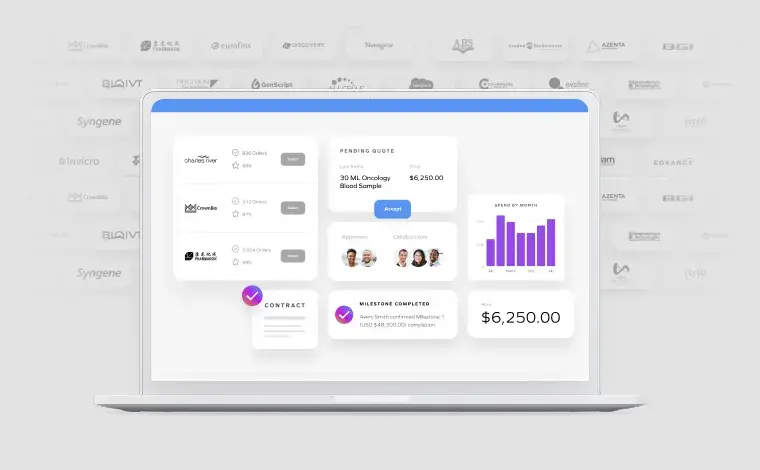
The Science Exchange Supplier Orchestration Platform closes this gap by digitizing supplier budgets and quotes upstream. Every line item (from milestones to deliverables) is ingested by AI, captured, structured, and integrated directly into P2P systems like SAP Ariba or Coupa.
With this transformation, organizations can:
- Enhance Benchmarking and Cost Modeling: Procurement teams gain access to detailed cost data, enabling robust benchmarking and should-cost modeling. This is crucial for identifying cost-saving opportunities and optimizing supplier contracts.
- Conduct Informed Supplier Negotiations: Granular data equips teams with historical insights, allowing them to leverage past pricing trends and performance metrics to drive more favorable terms in supplier contracts.
- Improve Reporting and Compliance: Detailed spend data ensures accurate reporting for internal stakeholders and external audits, reducing compliance risks and streamlining financial oversight.
- Derive Strategic Sourcing Insights: Organizations can analyze spending patterns, assess supplier innovation capabilities, and refine sourcing strategies to align with long-term R&D goals
- Standardize Pricing: with access to detailed cost data, sponsors can create meaningful rate cards with the strategic suppliers and configure them on the platform
- Drive Operational Efficiency: Automating data flows reduces manual workload, freeing up procurement and finance teams to focus on higher-value activities that drive business growth.
- From Oversight to Advantage: The shift from static attachments to structured spend data is more than an efficiency play. It is a strategic transformation that positions biopharma organizations to unlock cost savings, strengthen supplier relationships, and accelerate discovery timelines.
Science Exchange’s Supplier Orchestration Platform delivers this step-change in R&D procurement, turning one of the industry’s biggest operational blind spots into a source of competitive advantage.
The choice for biopharma leaders is clear: embrace data-driven spend management or risk being left behind in a sector where speed, compliance, and innovation are non-negotiable.