
We're excited that STEMCELL Technologies has joined the Science Exchange network of over 3,500 CROs, CMOs, and academic labs that help research organizations accelerate drug discoveries and innovation.
In today's article, we have the privilege of delving into the world of Leukopaks.
Leukopaks—the right cell source for your research
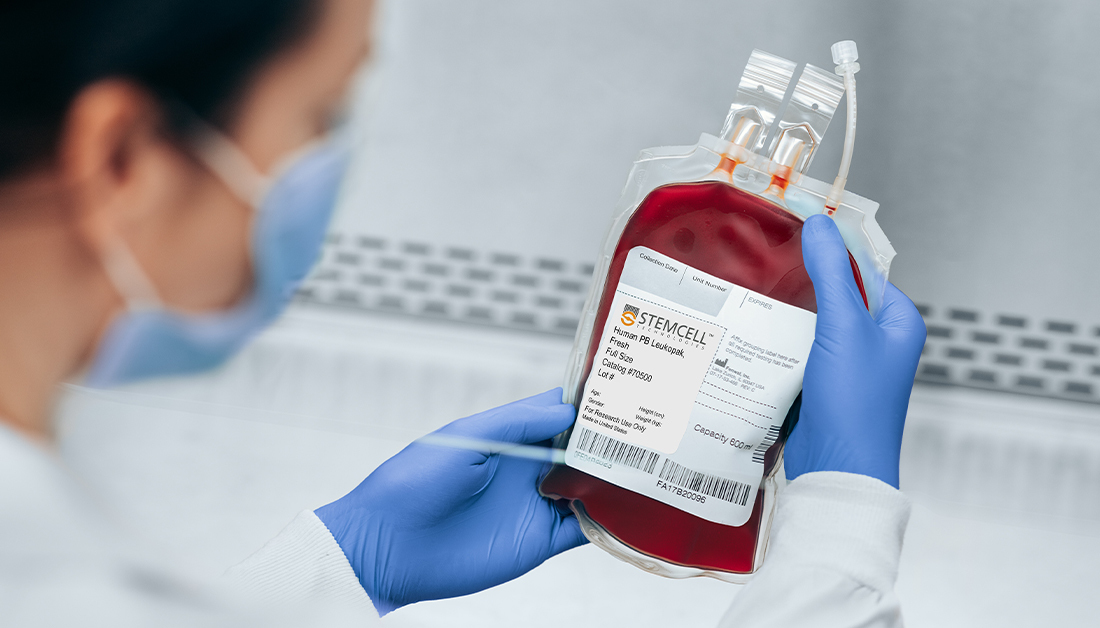
Leukopaks are enriched leukapheresis* products—an ideal source of human primary cells when large numbers of cells are required from a single donor. Like whole blood and buffy coats, leukopaks typically contain various immune cells, including T cells, B cells, natural killer (NK) cells, monocytes, etc. However, compared to whole blood and buffy coat, a full-size leukopak contains much higher concentrations of leukocytes per volume—typically greater than 9 billion cells in an average volume of < 200 mL. For a reference on the typical frequencies of each cell type in different cell sources, including leukopaks, whole blood, and peripheral blood mononuclear cells (PBMCs), get your free copy of the Frequencies of Human Cell Types in Blood-Related Sources wallchart.
For researchers working on adoptive cell therapy, T cell receptor (TCR) sequencing, and immunotherapy development, leukopaks allow for scalability, consistent cell composition, and reproducibility of experiments since they provide large numbers of cells sourced from a single donor. Compared to other cell sources, such as whole blood and PBMCs, leukopaks also offer higher yields of different immune cell types, standardization, and flexibility in experiments due to long-term storage capabilities. To use leukopaks efficiently for streamlining your experiments, choosing a trusted supplier of quality cells is crucial. It is also important to determine whether fresh or frozen leukopak products would be more appropriate for your application and to establish an efficient processing protocol/workflow that ensures high cell viability.
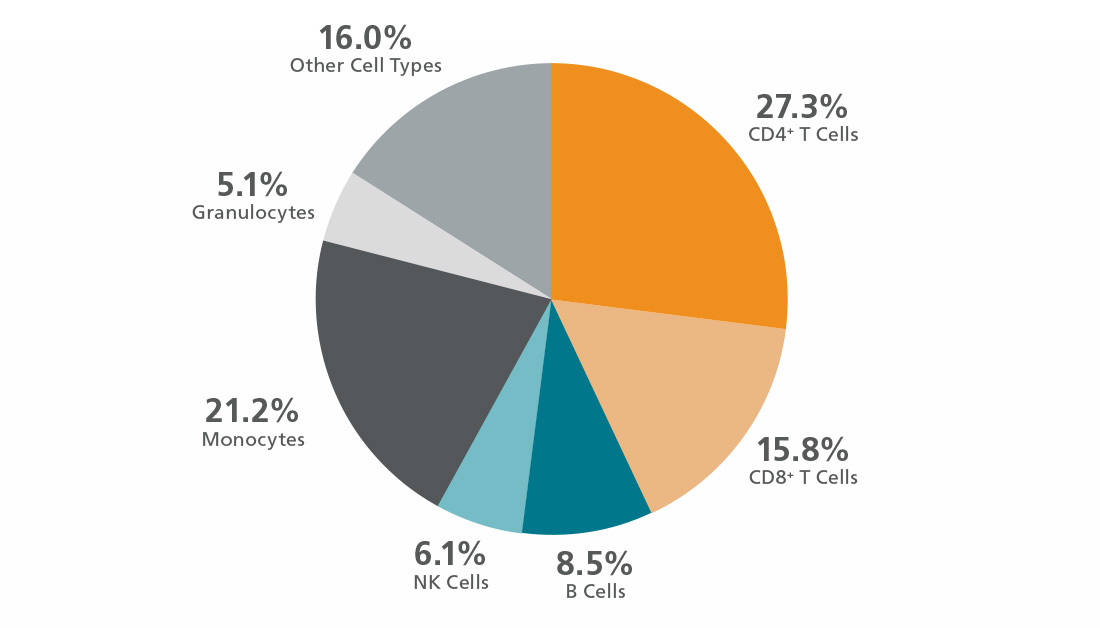
Figure 1. Mean percentages of cell subpopulations in a frozen leukopak
Representative chart showing the average frequencies of major immune subsets in leukopak products, as measured by flow cytometry before cryopreservation. Values shown are mean percentages of total viable leukocytes present in a frozen leukopak (n ≥ 30).
Types of leukopaks
Leukopaks are generally available as fresh or frozen products. At STEMCELL, fresh or frozen leukopaks** are collected in transfer bags using stringent and consistent protocols and offered in full, half, quarter, and tenth sizes. Whether to use fresh or frozen leukopaks depends on the specific needs of your experiment, such as cell type and functionality, logistics, availability, and timing flexibility. Thus, choosing a supplier that ensures a reliable supply of cells, with maintained quality and viability throughout the collection and shipping process, is imperative to the success of your research.
Fresh leukopaks
Fresh leukopaks are typically used to study the functions of white blood cells within a short period of time after collection. This is because fresh leukopaks contain viable and functional white blood cells that can be used immediately after collection without any loss of viability or functionality. STEMCELL's recent stability study suggests that fresh leukopaks can be stored at 2 - 8°C for up to 5 days post-apheresis.
Frozen or cryopreserved leukopaks
Frozen leukopaks, as the name suggests, are leukopaks that are cryopreserved and stored at a subzero temperature (normally ≤ -135°C) to preserve the biological sample for long-term storage. At STEMCELL, frozen leukopaks are processed shortly after collection, following stringent protocols, and cryopreserved in CryoStor® CS10—preserving quality and ensuring optimal cell viability and purity post-thaw.
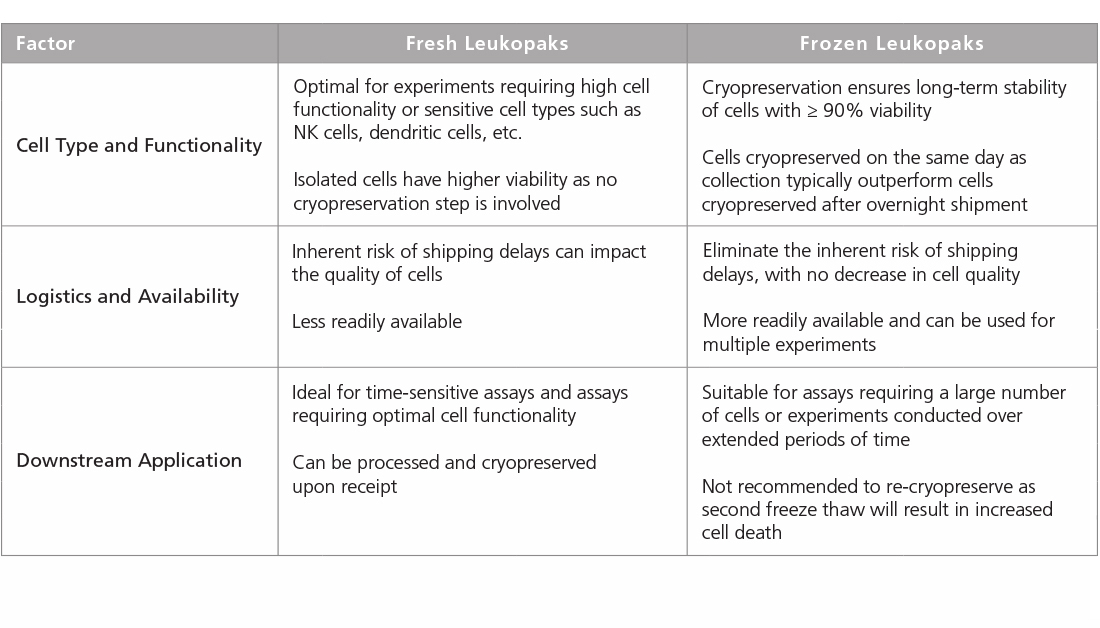
Figure 2. Factors to consider when choosing the right leukopak product for your research
Comparison of fresh or frozen leukopak product features to help you choose the ideal source of human primary cells for your downstream applications.
How to process a leukopak for downstream applications
As with any human biological material, obtaining quality starting material and managing the inherent variability and changes in stability over time are important factors to consider before processing a leukopak for downstream cell isolation. Both fresh and frozen leukopaks can be further processed into their cellular components, such as PBMCs and other isolated immune cell subsets of interest. This process can be arduous and, if done incorrectly, could result in reduced cell viability, hindering downstream experiments. Thus, choosing the right protocol and tools to efficiently process a leukopak and achieve ideal cell isolation is essential.
The following should be considered to ensure efficient leukopak processing:
- The nature of the biological material and its limitations
Fresh human primary cell materials have limited shelf life and must ideally be processed immediately upon delivery. Cryopreserved leukopaks, on the other hand, offer the advantage of being readily available when needed, allowing their use for several experiments over an extended period. However, it is critical to preserve cell functionality during thawing by optimizing your cell thawing protocol or using ThawSTAR® CB Automated Thawing System—reducing the risk of human error and standardizing cell thawing for scalable and reproducible results.
- Washing/dilution of leukopaks
It is recommended to perform an initial cell count of the leukopak before processing or washing steps. This number can then be compared to the cell count after the washing steps and used to calculate cell recovery. Before any downstream cell isolation step, it is important to determine if red blood cell (RBC) lysis and additional platelet removal steps are required.
- Counting cells and preparing cell suspensions for cell separation
Perform a cell count using either Trypan Blue or 3% Acetic Acid with Methylene Blue. Refer to the following protocol to learn how to count cells with a hemocytometer. Cells should be resuspended in the proper medium volume to obtain the desired cell concentration.
- Isolating cells of interest
The resuspended cells should be isolated using specific protocols depending on the cells of interest. For efficient isolation of immune cells from leukopaks, we recommend using EasySep™ or RoboSep™ column-free, immunomagnetic cell separation technologies for either manual or automated isolation, respectively. Immunomagnetic technology allows for the isolation of highly purified populations of specific immune cell subsets in as little as 8 minutes.
STEMCELL Technologies offers various high-quality, ethically sourced human primary cells** and resources to meet your research needs. We can also accommodate your unique requirements with personalized service and customizable products, including products that meet specific isolation and anticoagulant requirements, custom cell isolation kits, cell culture media, and more. To learn more, visit our Science Exchange storefront.
*Leukapheresis is a process of collecting white blood cells (WBCs) from peripheral blood of a healthy donor and returning the remainder to the circulation.
**Certain products are only available in select territories.
References
- Wang W et al. (2015) Cryopreservation of leukopaks shows maintained viability and functionality. Cytotherapy 17(6): S22.
- Ramachandran H et al. (2012) Optimal Thawing of Cryopreserved Peripheral Blood Mononuclear Cells for Use in High-Throughput Human Immune Monitoring Studies. Cells 1: 313–24.
- Clarke D & Lawrence N. (2019) Cryopreservation of the clinical apheresis starting material maintains quality and offers options to extend stability. Cytotherapy 21(5): S39–40.
- Li B et al. (2022) Comprehensive evaluation of the effects of long-term cryopreservation on peripheral blood mononuclear cells using flow cytometry. BMC Immunol 23.
- Hønge BL et al. (2017) Optimizing recovery of frozen human peripheral blood mononuclear cells for flow cytometry. PLoS ONE 12(11): e0187440.
- Tyagarajan S et al. (2019) Autologous cryopreserved leukapheresis cellular material for chimeric antigen receptor-T cell manufacture. Cytotherapy 21: 1198–205.